
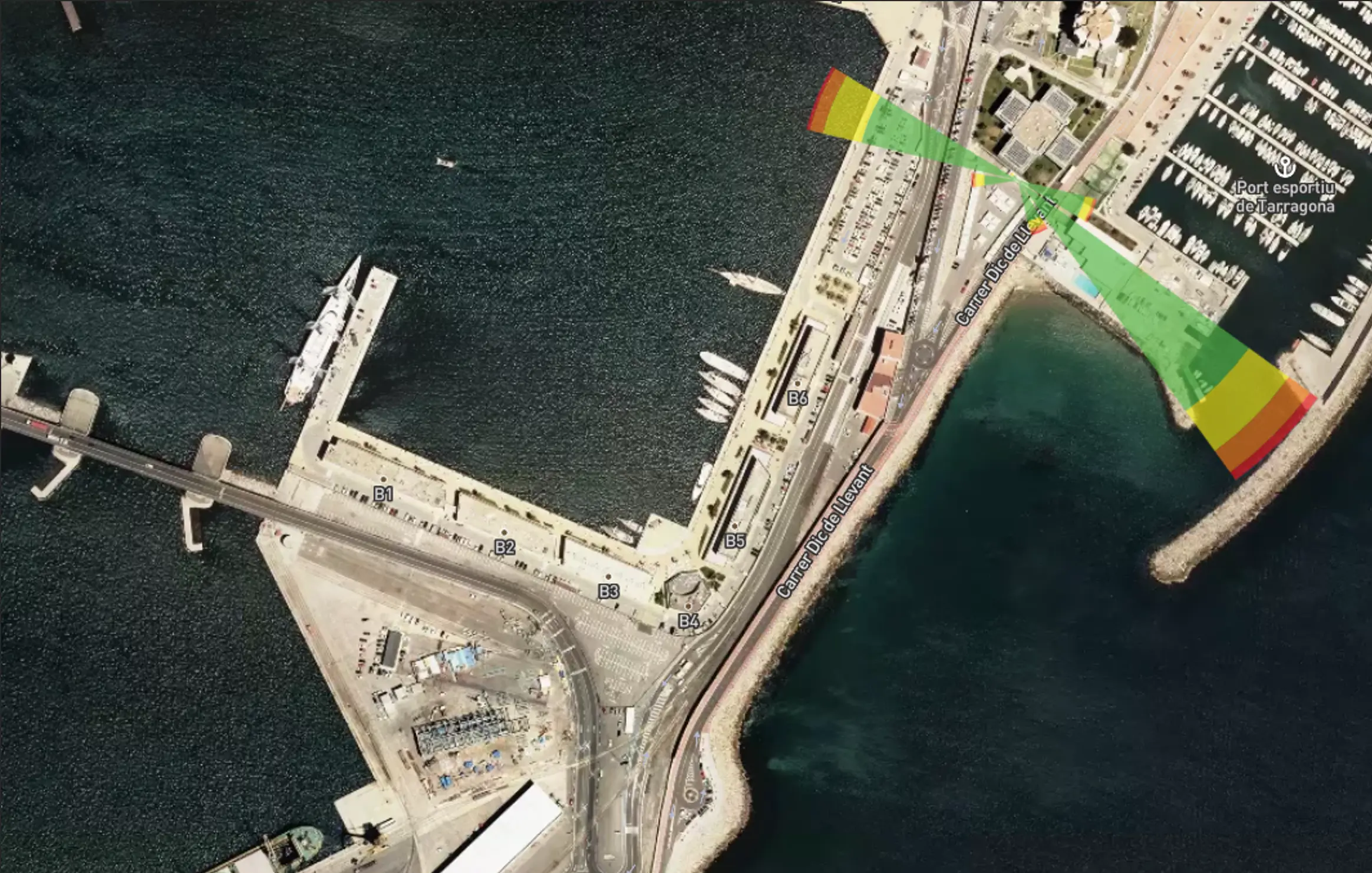
Industrial ports are among the most complex environmental monitoring environments in Europe. The combination of petrochemical clusters, bulk cargo terminals, storage infrastructure, vessel traffic, and heavy logistics activity creates multiple overlapping emission sources that are difficult to isolate and quantify using traditional monitoring approaches.
At the same time, the European regulatory landscape is becoming increasingly demanding. According to the European Environment Agency (EEA), air quality around ports and airports shows systematically higher concentrations of key pollutants such as NO₂ and PM₂.₅ compared to surrounding urban areas, and in some cases these levels are projected to exceed future EU limit values set for 2030. The report also highlights a critical structural issue: current air quality monitoring networks are often insufficient in spatial density and temporal resolution, limiting the ability of authorities and operators to fully understand exposure patterns and implement targeted mitigation measures.
This gap between environmental complexity and monitoring capacity is precisely where smart port solutions must evolve.
bettair® addresses this challenge by enabling dense, real-time, and scalable environmental monitoring networks designed for operational port environments. The system provides continuous measurements of air quality, odors, and environmental noise, delivering high-resolution environmental intelligence that supports both compliance and operational decision-making.
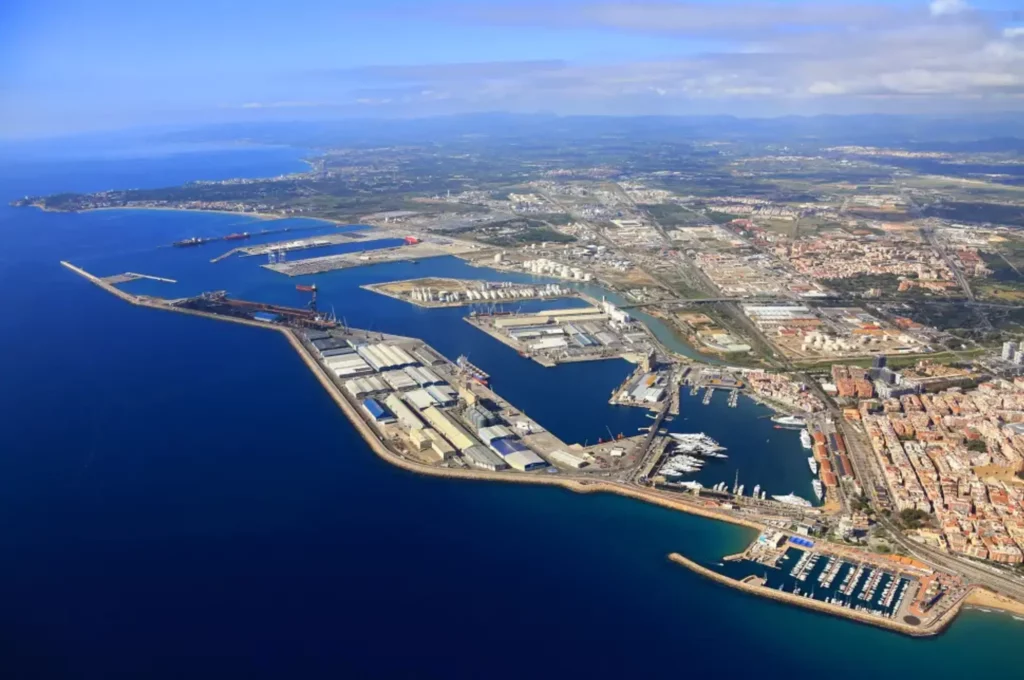
A representative example is the deployment at the Port of Tarragona, a strategic industrial and energy hub in Southern Europe and one of the continent’s most important petrochemical and fertilizer clusters. The port hosts more than 33 multinational companies and handles over 100 chemical products, connecting to more than 60 global ports through its maritime network. This level of industrial activity coexists with a surrounding population of approximately 150,000 residents who are potentially impacted by emissions from port and industrial operations, making environmental monitoring a critical societal as well as operational priority.
In this highly industrialized setting, bettair® operates multi-parameter monitoring networks that capture pollutants such as hydrogen sulfide (H₂S), sulfur dioxide (SO₂), ammonia (NH₃), and volatile organic compounds (VOCs), alongside key air quality indicators including NO₂ and particulate matter.
The monitoring system is deployed across areas influenced by petrochemical facilities, bulk material handling operations, storage tanks, and maritime traffic. In some cases, monitoring stations are strategically positioned near sensitive receptors such as residential areas or coastal public spaces, enabling early detection of odor or pollution events and supporting timely operational response before impacts reach populated zones. This allows continuous tracking of combined industrial and port-related emissions under real operational conditions.
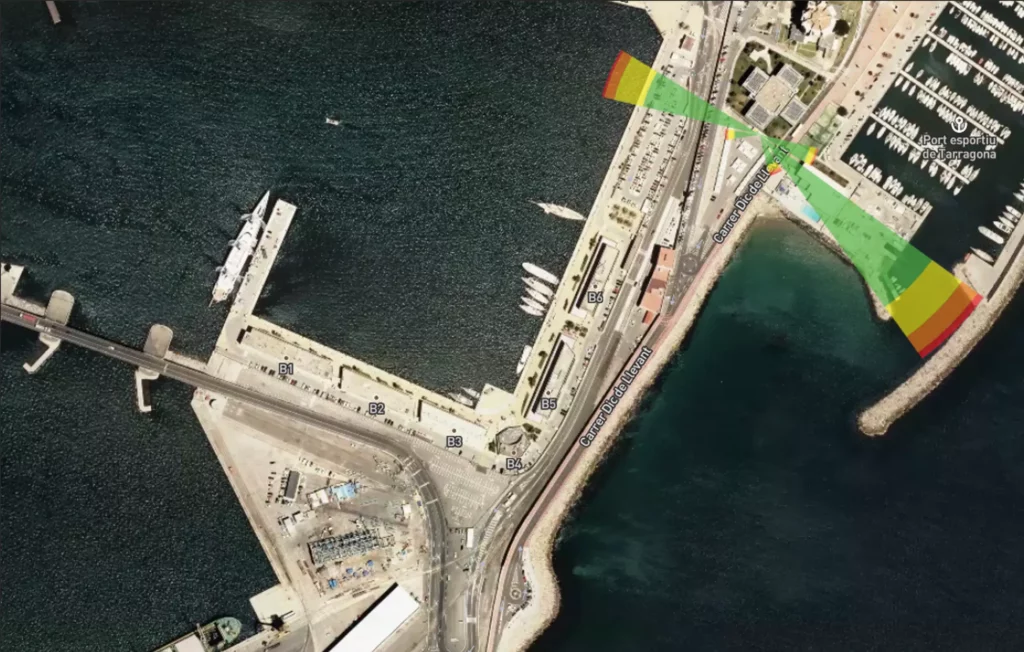
By combining dense sensor coverage with advanced calibration models and data analytics, bettair® enables environmental managers to:
- Identify emission hotspots across large and heterogeneous port areas
- Distinguish between overlapping industrial, logistical, and maritime sources
- Link pollution episodes to operational activity and meteorological conditions
- Detect abnormal events in real time and support faster response actions
- Build evidence-based environmental reporting aligned with regulatory frameworks
In addition, the system supports source attribution methodologies such as pollution roses, correlating pollutant concentrations with wind direction and port activity patterns. This is particularly relevant in complex industrial ports, where emissions are highly dependent on both operational cycles and atmospheric dispersion dynamics.
The Tarragona deployment illustrates a broader shift highlighted by the EEA: improving air quality in and around ports requires not only reducing emissions, but also fundamentally improving the granularity, coverage, and actionability of environmental data. Without sufficient spatial and temporal resolution, critical emission patterns remain invisible, and mitigation strategies risk being reactive rather than preventive.
Designed for large-scale deployment, bettair® monitoring nodes are compact, solar-powered, and require minimal infrastructure, enabling flexible expansion across terminals, industrial zones, and surrounding communities. This makes it possible to evolve from sparse regulatory monitoring into dense, intelligent environmental observation networks integrated into smart port ecosystems.
As industrial ports continue to digitalize and decarbonize, environmental monitoring becomes a core operational function rather than a compliance exercise. By delivering continuous, high-resolution environmental intelligence, bettair® supports ports in transitioning toward proactive environmental management—improving transparency, strengthening regulatory alignment, and enabling more sustainable industrial port operations.